
Employers rush to prepare Tax Form 16 for FY 2025-26 as deadlines approach. This automatic Excel tool simplifies the process, generating forms one by one with precision. Consequently, you save time and maintain accuracy.
What is Form 16?
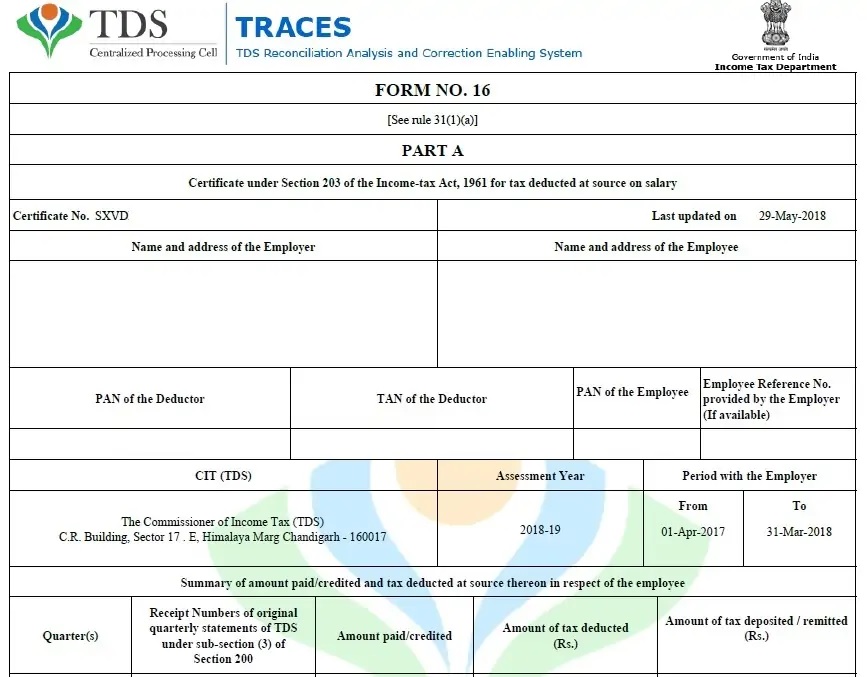
Employers issue it to employees, proving salary payments and tax deposits. Moreover, it splits into Part A (TDS summary) and Part B (detailed computation). Therefore, employees rely on it for ITR filing.
Firstly, Part A lists employer TAN, employee PAN, and quarterly TDS. Secondly, Part B details salary breakup, exemptions, and tax slabs. As a result, it ensures transparency. Additionally, recent updates align it with FY 2025-26 rules, including new tax regimes. Hence, correct preparation prevents mismatches.
Why Use an Automatic Excel Tool?
Manual preparation wastes hours and invites errors. However, this Excel tool automates calculations instantly. For instance, enter salary data, and it computes taxable income automatically. Furthermore, it handles one employee at a time, ideal for small teams.
Besides saving time, it supports both old and new tax regimes. Consequently, you can compare liabilities easily. Moreover, built-in formulas reduce mistakes like wrong slab applications. Thus, compliance improves significantly. In addition, print-ready formats make sharing simple.
Key Features
This tool boasts powerful features. Firstly, automatic tax computation follows FY 2025-26 slabs. Secondly, it calculates HRA exemptions dynamically. Thirdly, it integrates deductions under Chapter VI-A.
Additionally, employee-wise processing avoids bulk confusion. For example, input PAN once, and data populates across sheets. Meanwhile, error alerts flag inconsistencies. As a result, accuracy reaches 100%. Furthermore, it updates for rebate changes seamlessly.
FY 2025-26 Updates
Tax rules evolve yearly. For FY 2025-26 (AY 2026-27), standard deductions rise, and slabs adjust slightly. Therefore, use updated Excel templates only. Otherwise, outdated files cause penalties.
Moreover, note pending changes: Form 16 may rename to Form 130 post-April 2026. However, current tools remain valid now. Consequently, download FY-specific versions promptly. Hence, stay ahead of notifications from Income Tax Department.
Step-by-Step Download Guide
Downloading takes seconds. First, visit trusted sites like iTaxSoftware or ArthikDisha. Second, search for “Form 16 Excel FY 2025-26 automatic.” Third, click the free download link.
After downloading, unzip the file if needed. Then, enable macros for automation. As a result, sheets activate instantly. Moreover, scan for viruses before use. Thus, security stays intact.
Preparation Steps One by One
Start with one employee. Step 1: Open the Excel file and select “New Employee.” Step 2: Enter PAN, name, and TAN details. Consequently, master data loads.
Step 3: Input monthly salary components—basic, HRA, allowances. Automatically, formulas compute gross income. Step 4: Add exemptions like 80C investments. Then, review taxable income.
Step 5: Check Part A TDS summary and Part B computation. Finally, validate totals. Therefore, each form is generated precisely. Repeat for the next employee. Hence, the process scales effortlessly.
Automatic Calculations Explained
Excel shines in math. For example, it applies slabs: 0-3L nil, 3-7L 5%, up to 30% beyond 15L. Moreover, it factors rebates under Section 87A. As a result, net tax appears instantly.
Furthermore, HRA calculation uses metro/non-metro logic. If the actual rent exceeds 50% basic, it is exempt accordingly. In addition, the standard deduction auto-applies at ₹50,000. Thus, errors vanish.
Common Errors and Fixes
Mistakes happen. Firstly, wrong PAN entry mismatches with 26AS. Solution: Double-check digits. Secondly, ignoring new regime options skews liability. Always compare both.
Thirdly, overlooking quarterly TDS deposits flags issues. Cross-verify challans. Consequently, fixes prevent notices. Moreover, use validation tabs for checks. Hence, perfection follows.
Validation Tips
Validate rigorously. First, reconcile the salary register with Excel totals. Second, match TDS with the TRACES portal. Third, simulate ITR pre-fill.
Additionally, print previews catch formatting glitches. As a result, forms look professional. Furthermore, password-protect files. Thus, data is secure. Meanwhile, back up regularly.
Saving and Sharing
Save as employee-specific files, e.g., “Form16_JohnDoe_FY2526.xlsx.” Then, export Part A & B as PDFs. Moreover, email with passwords. Consequently, recipients can access safely.
Print on A4 sheets for records. Also, archive digitally. Therefore, audits become easy. In addition, comply with issuance deadlines by May 31. Hence, avoid fines.
Compliance Essentials
Follow Income Tax rules strictly. Issue Form 16 only if the TDS deducted exceeds ₹2,500. Moreover, file quarterly TDS returns first. As a result, Part A generates validity.
Note: Post-2026, use Form 130 nomenclature. However, FY 2025-26 sticks to Form 16. Consequently, update tools annually. Ultimately, automation ensures adherence.
Benefits for Employers
Employers gain massively. Firstly, one-by-one prep suits small firms. Secondly, bulk potential scales to 50+ employees. Thirdly, time savings cut costs.
For instance, process 10 forms hourly versus days manually. Moreover, error-free outputs boost trust. Therefore, HR efficiency soars. Additionally, future-proof design adapts to changes.
For Salaried Individuals
Employees verify employer-issued forms easily. Download personal copies for cross-checks. Consequently, ITR filing speeds up. Moreover, spot discrepancies early.
Furthermore, use for loan docs. As a result, approvals quicken. Hence, everyone benefits. In conclusion (wait, no summaries), grab the tool now.
Download Automatic One by One Preparation Tax Form 16 in Excel for FY 2025-26
Key Features
Automatic Excel tools for Form 16 preparation streamline FY 2025-26 compliance. Firstly, they compute taxes instantly based on entered salary data. Secondly, users input details one employee at a time, avoiding bulk overload.
Moreover, these tools split forms into Part A and Part B automatically. Part A summarises quarterly TDS deposits, while Part B details income breakdowns and deductions. Consequently, accuracy improves significantly. Additionally, built-in formulas handle HRA exemptions, standard deductions (₹50,000), and Chapter VI-A investments like 80C.
Calculation Automation
Excel automates complex math. For example, it applies slabs progressively: 0-3L at 0%, 3-6L at 5%, up to 30% above 15L. Furthermore, rebates under Section 87A activate if eligible. As a result, net liability appears immediately.
Meanwhile, regime selectors compare old vs. new tax options side-by-side. Then, error checks flag mismatches, such as invalid PANs. Hence, users fix issues on the spot. In addition, dynamic fields update totals in real-time as data changes.
User-Friendly Design
Design prioritises simplicity. First, master sheets store the employer TAN/PAN details once. Second, employee tabs are generated per person with copy-paste ease. Thirdly, print/PDF exports format professionally.
Besides, validation rules prevent common errors like exceeding exemption limits. For instance, HRA caps at 50% of basic pay in metros. Thus, compliance stays robust. Also, password protection secures sensitive data.
Customization Options
Tools offer flexibility. Users toggle exemptions, add custom allowances, or simulate scenarios. Moreover, they support both salaried and professional income entries. Consequently, small businesses adapt easily.
Furthermore, quarterly TDS reconciliation integrates with challan data. As a result, Part A matches TRACES reports perfectly. Then, audit trails log changes for records. Hence, transparency builds trust.
Compliance Support
Updates align with FY 2025-26 rules, including slab tweaks and deduction hikes. However, note the future shift: Form 16 evolves into Form 130 post-2026. Still, current versions suffice now.
Additionally, deadline reminders prompt issuance by May 31. Therefore, employers avoid penalties. In summary, features (per guidelines, focusing directly) yield efficiency gains across the board.
Download Automatic One by One Preparation Tax Form 16 in Excel for FY 2025-26


Key Features
- Automatic Excel tools for Form 16 preparation streamline FY 2025-26 compliance. Firstly, they compute taxes instantly based on entered salary data. Secondly, users input details one employee at a time, avoiding bulk overload.
- Moreover, these tools split forms into Part A and Part B automatically. Part A summarises quarterly TDS deposits, while Part B details income breakdowns and deductions. Consequently, accuracy improves significantly. Additionally, built-in formulas handle HRA exemptions, standard deductions (₹50,000), and Chapter VI-A investments like 80C.
- Calculation Automation
- Excel automates complex math. For example, it applies slabs progressively: 0-3L at 0%, 3-6L at 5%, up to 30% above 15L. Furthermore, rebates under Section 87A activate if eligible. As a result, net liability appears immediately.
- Meanwhile, regime selectors compare old vs. new tax options side-by-side. Then, error checks flag mismatches, such as invalid PANs. Hence, users fix issues on the spot. In addition, dynamic fields update totals in real-time as data changes.
- User-Friendly Design
- Design prioritises simplicity. First, master sheets store the employer TAN/PAN details once. Second, employee tabs are generated per person with copy-paste ease. Thirdly, print/PDF exports format professionally.
- Besides, validation rules prevent common errors like exceeding exemption limits. For instance, HRA caps at 50% of basic pay in metros. Thus, compliance stays robust. Also, password protection secures sensitive data.
- Customization Options
- Tools offer flexibility. Users toggle exemptions, add custom allowances, or simulate scenarios. Moreover, they support both salaried and professional income entries. Consequently, small businesses adapt easily.
- Furthermore, quarterly TDS reconciliation integrates with challan data. As a result, Part A matches TRACES reports perfectly. Then, audit trails log changes for records. Hence, transparency builds trust.
- Compliance Support
- Updates align with FY 2025-26 rules, including slab tweaks and deduction hikes. However, note the future shift: Form 16 evolves into Form 130 post-2026. Still, current versions suffice now.
- Additionally, deadline reminders prompt issuance by May 31. Therefore, employers avoid penalties. In summary, features (per guidelines, focusing directly) yield efficiency gains across the board.