In India’s Trade Policy: The 1990s and Beyond, Arvind Panagariya takes on the economics of protectionism | Books and Literature News

Table of Contents

The joy of reading PG Wodehouse is to discover two or three original similes per page that leave you marvelling at the man’s genius. Sample just one: “As an energetic Socialist, I do my best to see the good that is in him, but it’s hard. Comrade Bristow’s the most striking argument against the equality of man I’ve ever come across”.

Arvind Panagariya’s collection of mostly newspaper articles that appeared in the Indian print media over 1989-2023 are also striking arguments against equality aka arguments in favour of markets and capital within the economics discipline. Besides, the several trade metaphors that appear alongside provide keen insight into his deep and unchanging convictions about the design of trade policy. I must add a personal touch to the man’s consistency. Ever since I took his class on Trade Theory in a US University some three decades ago, his views have remained unvarying. If anything, these have been enriched by a political economy character, always based on sound free trade logic. For example, he argues vehemently against the increasing protectionism visible in the Indian economy over the last few years and says that India should eschew protection and use tariff reduction as a means to garner benefits for itself in trade negotiations. He presents a sound case of making a virtue out of necessity. Panagariya’s collection reflects this logic in not one but several articles. By and large, however, these exhortations have fallen on unresponsive ears.

Back to the charming metaphors: “Protection is skin to a skin disease, you cure it in one place and it appears on another”; “Protectionism appeals to many because its favourable impact on the output of the protected sector is immediately visible while the damage it does is spread throughout the economy and requires deeper probing”. A third: “A carbon equalising tax demand in mature economies is driven by a misguided sense of fairness and morality that unless others cut their emissions we should not be asked to cut ours. If a pastor at one’s church said to his flock, however, that it should be virtuous only if others are, that moral restraints by oneself in the presence of licentiousness by others should be rejected, his sermons would be popular but would invite the wrath of his superiors”.

I could go on, but let’s leave it at that. Panagariya doesn’t hesitate to call out India for its misguided protectionism or the West for its double standards. Along with the evolution of international trade into a more potent weapon of exporting standards, the two themes (India’s protectionism and West’s double standards) resonate throughout the book. Panagariya is not being anti-national when he points out that India should have joined the Regional Comprehensive Economic Partnership (RCEP), in fact he asserts that it is in India’s own interest to do that. Market access, inflow of Foreign Direct Investment (FDI), increased opportunities to engage meaningfully in regional value chains and, of course, improved competitiveness are some of the benefits. RCEP is thus a lost opportunity, notwithstanding the alleged costs such as potential increase in imports from China. But to deal with that we have to engage more rather than less with China. Does this sound counter intuitive? Not really. Imports from China create exports, thereby helping us slowly but steadily move up the value chain via “learning by doing”. That is what China did over 30 years. Complaining about China’s competitiveness or creating disabilities wantonly for foreign capital is a sub-optimal way to compete. In fact, Panagariya believes that the way Indian industry competed by lobbying to create disabilities for rivals has damaged competitiveness that will take several years to remedy.

Panagariya’s collection is a veritable primer in the progress and regress of globalisation. The articles are arranged by themes and ideas that are overwhelmingly relevant even today. The themes range from protectionism, bilateral trade issues between India and China and India and the US, Free Trade Agreements (FTAs) in general, the damage and potential repair of multilateralism i.e. the World Trade Organisation (WTO) to the vexatious fusing of trade with standards. In its heyday, trade negotiations were mostly about tariff reductions and only peripherally about standards. Today it’s the opposite, and Panagariya’s articles provide a glimpse into the process that made it so.

Festive offer

The linkage of trade and standards that extend well beyond human rights has become customary in trade negotiations and in the WTO. Whether it is environment, intellectual property, competition policy, State Owned Enterprises, the new-age agreements are all focused on these. How we got here is to be found in Panagariya’s collection that while easy to read, is far from easy to recognise. Let me elaborate: Policy advice is often criticised by “mainstream” economists as being based on opinions, rather than facts. For Panagariya, nothing could be farther from the truth. Every article in the collection is based on analysis, data and scholarship. Policy advice that flows is not drawn from thin air, but after a deep understanding of the underlying issues. Bureaucrats must read this collection and deploy the ideas to the extent possible. Serious students of trade will understand deep scholarship is a tool to elucidate, and not obscure.

Kathuria is dean, School of Humanities and Social Sciences and professor of Economics at the Shiv Nadar Institution of Eminence. Views are personal


[ad_2]

Source link

Related Posts

Form 10E
Arrears Relief Calculator U/s 89(1)
admin

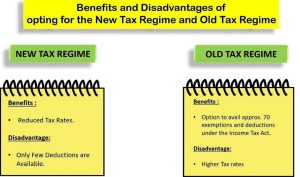
Calculating income tax often feels like solving a complicated puzzle, doesn’t it? You gather salary slips, deductions, exemptions, and slabs, yet confusion remains. However, things do not have to be this stressful anymore. An Automatic Income Tax Calculator in Excel for Govt & Non-Govt Employees (FY 2025-26) works like a smart assistant that does the heavy lifting for you. In fact, it calculates tax automatically, accurately, and instantly. Moreover, it saves time, reduces errors, and gives you peace of mind. So, whether you are a government employee, a private-sector professional, or even a pensioner, this article will guide you step by step. Additionally, it will help you understand why Auto Calculate Income Tax Preparation Software in Excel is becoming the preferred choice for the general public across India. Table of Contents Sr# Headings 1 Introduction to Automatic Income Tax Calculator 2 Why Income Tax Calculation Feels Complicated 3 What Is Auto Calculate Income Tax Preparation Software in Excel 4 Who Can Use This Excel Tax Calculator 5 Key Features of Automatic Income Tax Calculator 6 Benefits for Government Employees 7 Benefits for Non-Government Employees 8 Old Tax Regime vs New Tax Regime Comparison 9 Deductions and Exemptions Covered 10 Step-by-Step: How the Excel Calculator Works 11 Accuracy, Transparency, and Error Reduction 12 Why Excel Is Better Than Online Calculators 13 Data Security and Offline Advantage 14 How This Tool Saves Time and Money 15 Conclusion and Final Thoughts 1. Introduction to Automatic Income Tax Calculator To begin with, an automatic income tax calculator in Excel is designed to simplify tax computation. Instead of manually applying slabs and formulas, you simply enter your income details. Consequently, the calculator does everything else. Moreover, it updates totals instantly, which means no more guesswork. Therefore, for FY 2025-26, this tool becomes extremely useful as tax rules continue to evolve. 2. Why Income Tax Calculation Feels Complicated Frankly speaking, income tax feels complicated because it involves multiple variables. Firstly, there are different tax slabs. Secondly, deductions change from person to person. Thirdly, exemptions vary based on salary structure. However, when you use Auto Calculate Income Tax Preparation Software in Excel, these complexities fade away. In other words, the software acts like a GPS that guides you smoothly through a confusing route. 3. What Is Auto Calculate Income Tax Preparation Software in Excel Simply put, this software is an Excel-based calculator with built-in formulas. Not only does it calculate tax automatically, but it also considers deductions, rebates, cess, and surcharge. Furthermore, it allows you to compare the old and new tax regimes side by side. As a result, you can choose the most beneficial option without stress. 4. Who Can Use This Excel Tax Calculator Interestingly, this tool is not limited to one group. Government employees, private employees, PSU staff, teachers, bank employees, and even consultants can use it. Additionally, pensioners and senior citizens can benefit as well. Therefore, it truly serves the general public. 5. Key Features of Automatic Income Tax Calculator Some standout features include: Automatic tax calculation Built-in tax slabs for FY 2025-26 Old vs New regime comparison Support for deductions under Chapter VI-A Simple, user-friendly interface Moreover, these features work together seamlessly. Hence, even beginners can use the calculator confidently. 6. Benefits for Government Employees For government employees, salary structures include DA, HRA, and other allowances. Therefore, tax calculation becomes tricky. However, this Excel calculator automatically adjusts these components. Additionally, it considers standard deduction and applicable exemptions. As a result, government employees save time and avoid errors. 7. Benefits for Non-Government Employees Similarly, non-government employees often deal with performance bonuses, incentives, and variable pay. Consequently, manual calculation leads to mistakes. With the Auto Calculate Income Tax Preparation Software in Excel, everything is handled logically. Furthermore, you can revise figures anytime, and results update instantly. 8. Old Tax Regime vs New Tax Regime Comparison One of the biggest advantages is regime comparison. On the one hand, the old regime offers deductions. On the other hand, the new regime provides lower slab rates. Therefore, the Excel calculator compares both automatically. Eventually, you clearly see which regime saves more tax. 9. Deductions and Exemptions Covered The calculator supports major deductions such as: Section 80C Section 80D Section 80CCD Standard Deduction HRA Exemption Moreover, it applies limits automatically. Thus, compliance becomes effortless. 10. Step-by-Step: How the Excel Calculator Works Firstly, you enter basic salary details. Secondly, you input allowances and deductions. Thirdly, the software calculates taxable income. Finally, it computes the tax payable. Meanwhile, every step updates in real time. Hence, you always stay informed. 11. Accuracy, Transparency, and Error Reduction Accuracy matters when money is involved. Therefore, this calculator uses predefined formulas to minimize errors. Moreover, transparency improves because you can see every calculation. Consequently, trust increases. 12. Why Excel Is Better Than Online Calculators Unlike online tools, Excel works offline. Additionally, there are no ads or distractions. Furthermore, you maintain full control over your data. Hence, Excel-based calculators are reliable and secure. 13. Data Security and Offline Advantage Since the file stays on your computer, your data remains private. Moreover, there is no need for internet access. As a result, sensitive financial information stays protected. 14. How This Tool Saves Time and Money Time is money, right? Because calculations are automatic, you save hours. Moreover, you avoid professional fees for basic tax estimation. Therefore, this tool pays for itself quickly. 15. Conclusion and Final Thoughts To sum up, Download Automatic Income Tax Calculator in Excel for Govt & Non-Govt Employees (FY 2025-26) is a smart move. It simplifies tax calculation, improves accuracy, and empowers you to make informed decisions. Ultimately, Auto Calculate Income Tax Preparation Software in Excel works like a financial compass, always pointing you in the right direction. Frequently Asked Questions (FAQs) Can government and private employees both use this Excel tax calculator? Yes, absolutely. The calculator is designed for both government and non-government employees. Does this calculator support FY 2025-26 tax slabs? Yes, it includes updated slabs and rules applicable for FY 2025-26. Can I compare old and new tax regimes using this software? Yes, the calculator automatically compares both regimes and shows tax savings. Is Excel-based tax calculation accurate? Yes, because predefined formulas reduce manual errors significantly. Is my data safe when using this Excel income tax calculator? Yes, since it works offline, your financial data remains fully secure. Download Automatic Income Tax Calculator in Excel for Govt & Non-Govt Employees (FY 2025-26) Key Features of this Excel Utility are:- Firstly, automatic tax calculation: The Excel tool instantly calculates income tax as soon as you enter salary details, thereby eliminating manual effort and confusion. Secondly, updated tax slabs for FY 2025-26: It automatically applies the latest income tax slabs, hence ensuring accuracy and compliance with current rules. Moreover, old vs new tax regime comparison: The calculator compares both regimes side by side, so you can easily choose the most tax-saving option. Additionally, support for Govt & Non-Govt employees: Whether you work in the government sector or the private sector, the calculator adjusts calculations accordingly. Furthermore, built-in deductions and exemptions: It covers major sections like 80C, 80D, 80CCD, HRA, and standard deduction, therefore reducing errors. As a result, real-time auto updates: Whenever you change any value, the tax payable updates instantly, thus saving time. Likewise, user-friendly Excel format: Since most people are familiar with Excel, the software feels simple, clear, and easy to operate. In addition, error-free formula-based working: Predefined formulas minimise calculation mistakes, consequently improving reliability. Meanwhile, offline usage advantage: You can use the calculator without internet access, hence keeping your data secure. Finally, time-saving and cost-effective: Because everything is automated, you save hours of work and avoid unnecessary professional fees.

Calculating income tax often feels like solving a complicated puzzle, doesn’t it? You gather salary slips, deductions, exemptions, and slabs, yet confusion remains. However, things

Read More »
error: Content is protected !!