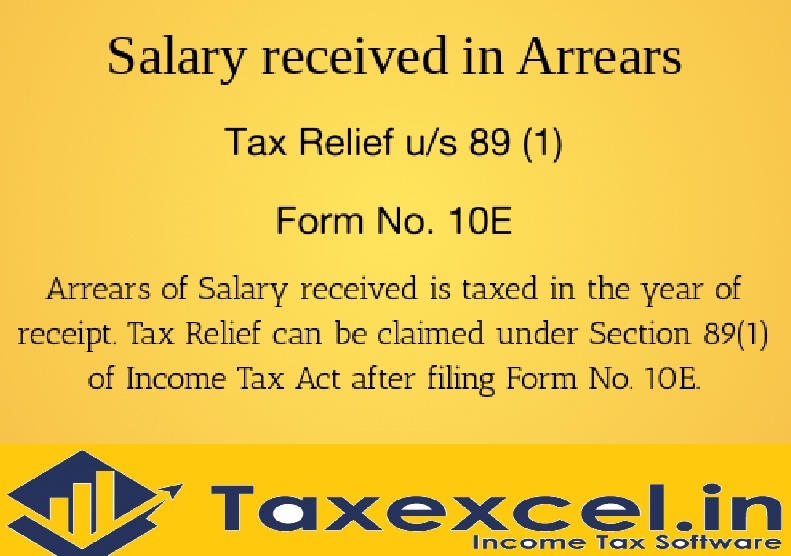
Have you ever received salary arrears and suddenly felt confused about your tax burden? If yes, you are not alone. In fact, many salaried taxpayers face this exact situation every year. Salary arrears often look like a blessing at first. However, soon afterwards, they can feel like a burden because they push you into a higher tax slab. Therefore, the Income Tax Act provides relief under Section 89(1) to ensure fairness.
That is precisely where the Automatic Income Tax Arrears Relief Calculator in Excel with Form 10E becomes your best companion. Think of it like a GPS for tax calculation—it guides you step by step, prevents wrong turns, and finally takes you to the right destination. Moreover, this Excel utility works seamlessly from FY 2000-01 to FY 2025-26, which makes it extremely flexible and future-ready.
Table of Contents
| Sr# | Headings |
| 1 | Understanding Income Tax Arrears |
| 2 | What Is Relief Under Section 89(1)? |
| 3 | Why Form 10E Is Mandatory |
| 4 | Problems with Manual Arrears Calculation |
| 5 | What Is an Automatic Income Tax Arrears Relief Calculator in Excel? |
| 6 | Key Features of the Excel Utility |
| 7 | Automatic Income Tax Form 10E in Excel Explained |
| 8 | Supported Financial Years (FY 2000-01 to FY 2025-26) |
| 9 | Step-by-Step Guide to Using the Calculator |
| 10 | Old Tax Regime vs New Tax Regime Comparison |
| 11 | Who Should Use This Excel Tool? |
| 12 | Benefits for Government and Non-Government Employees |
| 13 | Common Mistakes Avoided by Automation |
| 14 | Downloading and Using the Excel File Safely |
| 15 | Final Thoughts on Smart Tax Planning |
1. Understanding Income Tax Arrears
Firstly, income tax arrears refer to income that belongs to earlier financial years but reaches you in the current year. In other words, you earn the money earlier, yet you receive it later. For example, salary revisions, DA arrears, bonus adjustments, or delayed increments usually fall into this category.
Secondly, when you add this arrears income to your current salary, your total income increases immediately. Consequently, your tax liability rises sharply. Moreover, the higher income may push you into a higher tax slab. As a result, you may pay more tax than you should.
Therefore, without proper relief, this situation becomes unfair. Hence, to correct this imbalance, the law actively steps in and protects taxpayers from unnecessary financial burden.
2. What Is Relief Under Section 89(1)?
Firstly, Section 89(1) allows taxpayers to claim relief when they receive arrears or advance salary. Simply put, it distributes the arrears income across the years to which it actually belongs.
Secondly, by spreading income year-wise, the tax calculation becomes balanced. Consequently, your tax liability reduces fairly. Moreover, this method ensures that delayed payments do not create sudden financial pressure.
In other words, the government ensures that taxpayers do not suffer just because they receive income late. Therefore, Section 89(1) promotes fairness and justice in taxation.
3. Why Form 10E Is Mandatory
Many taxpayers often ask, “Can I claim relief without filing Form 10E?” Unfortunately, the answer is no.
Firstly, Form 10E is compulsory for claiming relief under Section 89(1). Secondly, even if your employer calculates relief in Form 16, you must still submit Form 10E online.
Otherwise, the system may reject your claim during processing. As a result, you may lose the relief benefit. Therefore, filing Form 10E becomes not only important but essential.
4. Problems with Manual Arrears Calculation
Manual arrears calculation creates several problems. Firstly, it consumes a lot of time. Secondly, it increases the risk of errors. For instance, you may miss slab rate changes. Additionally, you might apply the wrong surcharge. Moreover, you may forget to calculate the health and education cess.
Similarly, you may allocate arrears to incorrect years. Consequently, even a small mistake can lead to tax notices, refund delays, or mismatches. Therefore, manual calculation often creates unnecessary stress.
5. What Is an Automatic Income Tax Arrears Relief Calculator in Excel?
An Automatic Income Tax Arrears Relief Calculator in Excel works as a smart digital solution. Firstly, it calculates relief under Section 89(1) instantly. Secondly, once you enter basic salary and arrears details, the Excel file performs all calculations automatically.
Moreover, it also generates the Automatic Income Tax Form 10E in Excel, which saves significant time. As a result, the entire process becomes simple, quick, and accurate.
6. Key Features of the Excel Utility
Firstly, the utility calculates arrears relief automatically.
Secondly, it supports multiple financial years.
Thirdly, it applies the correct tax slabs year-wise.
Moreover, it compares taxes with and without arrears.
Additionally, it auto-prepares Form 10E.
Furthermore, it minimises human error.
As a result, tax filing becomes smooth and stress-free.
Above all, automation improves accuracy and confidence.
7. Automatic Income Tax Form 10E in Excel Explained
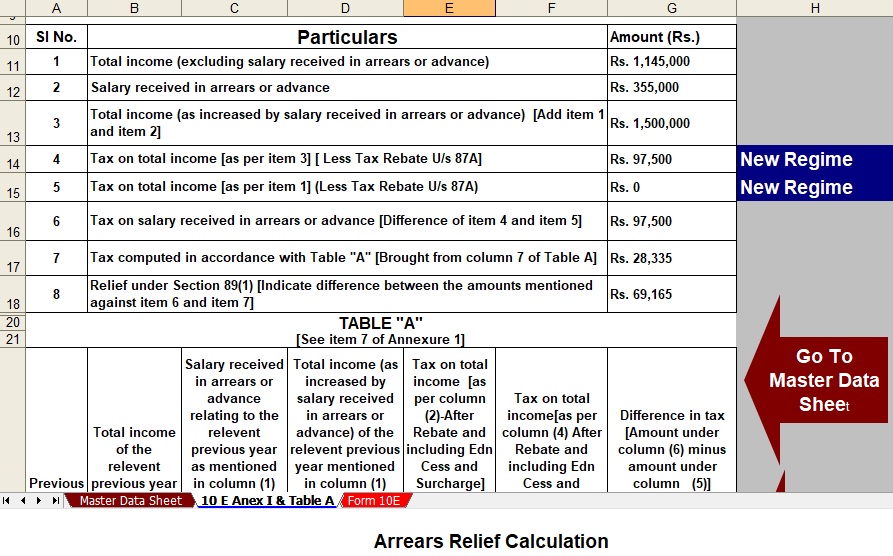
The Automatic Income Tax Form 10E in Excel acts as the core of this utility. Firstly, once you enter all the required data, the form prepares itself automatically. Secondly, it follows the prescribed format correctly.
Therefore, you no longer struggle with manual online entry. Instead, you simply copy the values and file Form 10E easily. Consequently, the risk of rejection reduces significantly.
8. Supported Financial Years (FY 2000-01 to FY 2025-26)
One major advantage of this calculator is its wide coverage. Firstly, it supports financial years from FY 2000-01 to FY 2025-26.
Hence, whether you receive arrears for old years or recent years, the tool handles everything efficiently. Consequently, it becomes ideal for audits, revisions, and late settlements.
9. Step-by-Step Guide to Using the Calculator
Firstly, download the Excel file.
Secondly, enter personal and salary details.
Thirdly, input arrears year-wise.
Moreover, review automatic tax calculations.
Additionally, check relief under Section 89(1).
Finally, generate the Automatic Income Tax Form 10E in Excel.
Thus, within minutes, your entire task gets completed smoothly.
10. Old Tax Regime vs New Tax Regime Comparison
The calculator smartly compares both tax regimes. Firstly, the Old Regime allows deductions and relief. In contrast, the New Regime offers lower slabs without deductions.
Therefore, by comparing both results side by side, you can easily choose the most beneficial option. As a result, your tax planning becomes smarter.
11. Who Should Use This Excel Tool?
This tool works perfectly for salaried employees, pensioners receiving arrears, accounts professionals, tax consultants, and payroll managers.
In short, anyone dealing with salary arrears can benefit greatly from this Excel utility.
12. Benefits for Government and Non-Government Employees
Government employees often receive DA arrears. Meanwhile, non-government employees usually receive revision arrears. Fortunately, this Excel utility supports both categories equally.
Hence, it works as a universal solution for all salaried taxpayers.
13. Common Mistakes Avoided by Automation
Automation avoids errors such as wrong year allocation, incorrect slab application, missing cess calculation, and manual Form 10E mistakes.
Therefore, accuracy improves significantly. Consequently, compliance becomes easier and safer.
14. Downloading and Using the Excel File Safely
Always download the Excel file from a trusted source. Additionally, enable macros if required. Moreover, keep a backup copy for safety.
That way, your data remains protected and secure at all times.
15. Final Thoughts on Smart Tax Planning
Tax planning does not need to feel complicated. With the Automatic Income Tax Arrears Relief Calculator in Excel, you gain clarity, confidence, and control.
It works like a tax expert sitting beside you and guiding every step. Ultimately, smart tools always lead to smart decisions.
In Conclusion
To sum up, salary arrears no longer need to cause stress. By using the Automatic Income Tax Form 10E in Excel, you can calculate relief accurately, file correctly, and save tax legally.
Therefore, if you want peace of mind, accuracy, and compliance, this Excel calculator is truly worth downloading.
Frequently Asked Questions (FAQs)
1. What is the Automatic Income Tax Form 10E in Excel?
It is an Excel-based tool that automatically prepares Form 10E for claiming relief under Section 89(1).
2. Is Form 10E mandatory for arrears relief?
Yes, without filing Form 10E, relief under Section 89(1) is not allowed.
3. Can this calculator handle old arrears?
Yes, it supports calculations from FY 2000-01 onwards.
4. Is this Excel utility useful for private employees?
Yes, both government and non-government employees can use it.
5. Does this tool reduce tax legally?
Yes, it helps you claim lawful relief as permitted under the Income Tax Act.
Download Automatic Income Tax Arrears Relief Calculator in Excel U/s 89(1) with Form 10E from FY 2000-01 to FY 2025-26

Download Automatic Income Tax Form 10E in Excel from 2000-01 to FY 2025-26

Key Features of the Article
- Firstly, the article explains income tax arrears in simple words, so even first-time taxpayers can easily understand the concept without confusion.
- Secondly, it clearly describes relief under Section 89(1), thereby helping readers know why the government provides this benefit and how it protects them from excess tax.
- Moreover, the article highlights the importance of Form 10E, ensuring readers understand why filing it is mandatory before claiming arrears relief.
- Additionally, it introduces the Automatic Income Tax Arrears Relief Calculator in Excel, thus showing how automation removes calculation stress and manual errors.
- Furthermore, the article focuses on Automatic Income Tax Form 10E in Excel, which helps readers save time while preparing and filing Form 10E accurately.
- Meanwhile, it explains step-by-step usage of the Excel calculator, so users can follow the process smoothly without professional assistance.
- In addition, the article covers financial years from FY 2000-01 to FY 2025-26, therefore making it useful for both old and recent arrears cases.
- Similarly, it compares the Old Tax Regime and New Tax Regime, helping readers choose the most tax-efficient option wisely.
- As a result, the article helps government and non-government employees alike, ensuring the content remains relevant to a wide audience.
- Consequently, it highlights common mistakes avoided by automation, thereby reducing the risk of notices, mismatches, or delayed refunds.
- On the other hand, the article explains why Excel-based tools are more transparent than online calculators, which builds trust among readers.
- Finally, the article concludes with practical FAQs, thus clearing common doubts and improving user confidence before filing Form 10E.